

When selecting FRP grating for industrial flooring, the surface finish is an important consideration alongside panel dimensions, load requirements, support spacing, and material compatibility. The surface affects how people interact with the grating and can influence cleaning routines and suitability for different working environments.
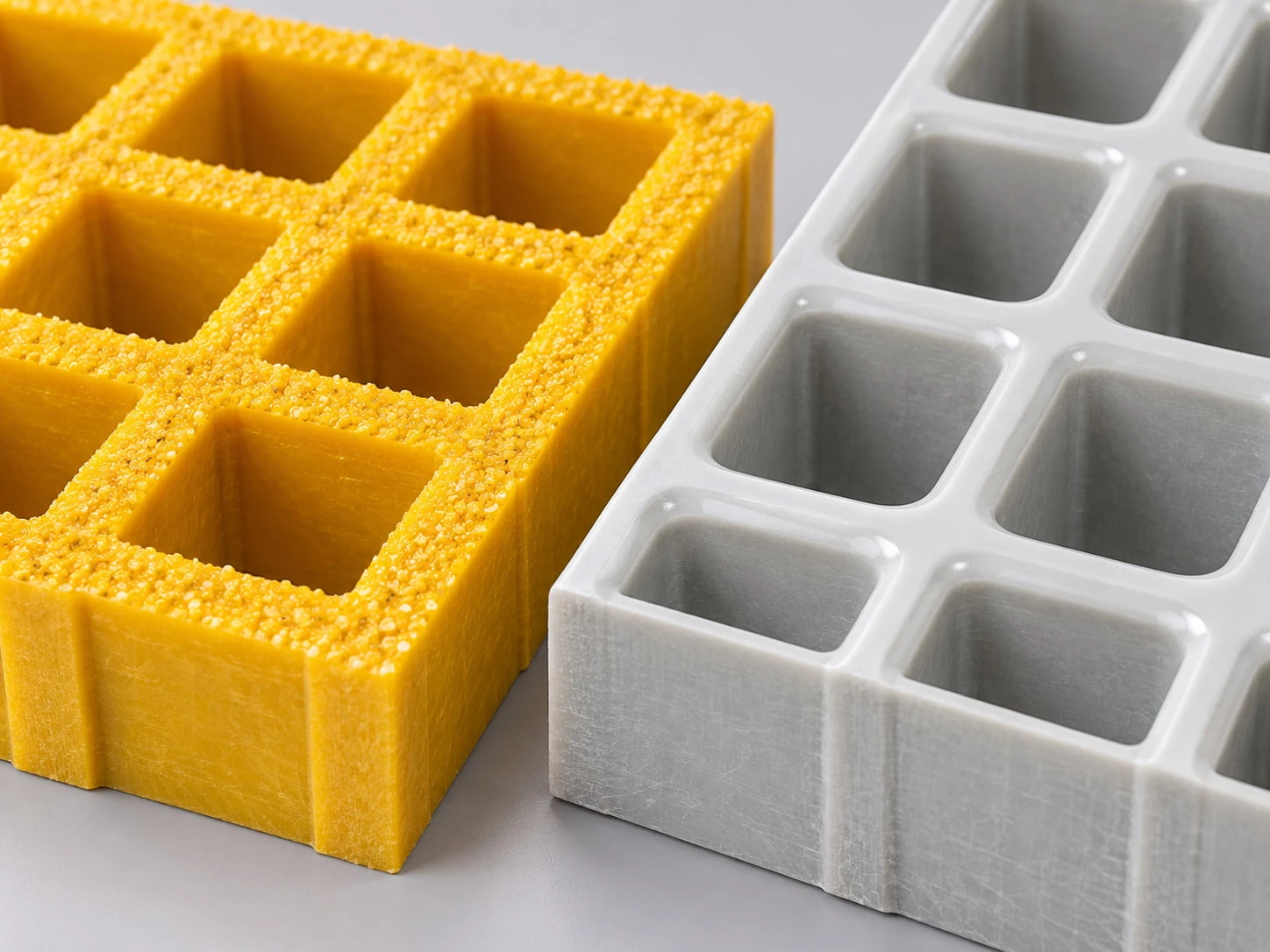
Two surface options commonly considered for molded fiberglass grating are concave and gritted finishes. Both may be used in industrial applications, but the right choice depends on the site's operating conditions, expected foot traffic, contamination risks, and maintenance procedures.
This guide explains the differences between concave and gritted FRP grating surfaces, outlines the factors that should influence selection, and provides a practical checklist for industrial buyers and project engineers.
Why Does FRP Grating Surface Finish Matter?
FRP grating is used for platforms, walkways, maintenance areas, and other installations where an open-grid flooring system may be suitable. The surface finish is one part of the overall product specification and should be selected according to the conditions in which the grating will be used.
In industrial environments, flooring may be exposed to water, dust, process residues, cleaning agents, or other contaminants. Personnel may also wear different types of footwear and move between dry and wet areas. These conditions should be considered when evaluating a grating surface.
Surface selection should not be treated as a substitute for proper drainage, housekeeping, suitable footwear, safe access design, and workplace risk controls. The complete flooring system must be assessed for the intended application.
What Is Concave FRP Grating?
Concave FRP grating features a recessed or curved surface profile on the exposed top of the grating bars. This surface configuration is available on certain molded fiberglass grating products.
When considering a concave surface, buyers should evaluate the product's surface geometry, the operating environment, and the manufacturer's available technical information. The suitability of this finish depends on the actual conditions of use rather than the surface name alone.
Key Considerations for Concave Surfaces
- Surface profile: Confirm the actual concave profile using the supplier's product images or samples.
- Operating conditions: Consider whether the floor is normally dry, frequently wet, or exposed to process materials.
- Cleaning requirements: Evaluate how the surface and open grid can be cleaned using the site's approved procedures.
- Foot traffic: Consider the type and frequency of pedestrian movement in the installation area.
- Technical verification: Request applicable surface-performance information if the project specifies measurable slip-resistance requirements.
A concave finish should not automatically be assumed to provide a particular level of slip resistance. Where a project has specific safety requirements, the selected product should be verified against the relevant test method and acceptance criteria.
What Is Gritted FRP Grating?
Gritted FRP grating has a textured top surface designed to provide a more abrasive contact surface than a smooth finish. The exact texture, construction, and performance characteristics depend on the product offered by the manufacturer.
Gritted surfaces may be considered for industrial walkways and platforms where additional surface texture is a selection priority. However, the presence of grit alone does not establish a certified slip-resistance rating or guarantee safe footing under every condition.
Key Considerations for Gritted Surfaces
- Texture requirements: Confirm the surface texture and whether it meets the project's specified requirements.
- Contamination: Assess the likely presence of water, oil, dust, process residues, or other substances that could affect footing.
- Cleaning procedures: Confirm that the chosen cleaning methods are compatible with the grating and its surface finish.
- Wear and service conditions: Consider expected traffic and the inspection requirements for the installed surface.
- Compliance: Obtain test reports or supporting documentation where a particular slip-resistance standard is required.
Gritted grating is not a universal solution for every hazardous floor. The final selection should account for the contaminant, footwear, drainage, operating procedures, and applicable safety requirements.
Concave vs. Gritted FRP Grating: Main Differences
The most useful comparison is based on the physical surface, the conditions of use, and the project's technical requirements. Neither surface should be considered automatically superior in every application.
| Comparison Factor | Concave Surface | Gritted Surface |
|---|---|---|
| Surface Profile | Features a recessed or curved top profile. | Features a textured, grit-like top surface. |
| Selection Priority | Evaluate the specific surface geometry and its suitability for the intended environment. | Evaluate texture requirements and any specified slip-resistance performance. |
| Wet or Contaminated Areas | Suitability must be assessed against the actual contaminants and site conditions. | May be considered where additional surface texture is required; actual performance must be verified. |
| Cleaning | Confirm that the profile can be maintained using the planned cleaning method. | Confirm that the textured surface can be cleaned and inspected effectively. |
| Technical Evidence | Request product-specific information relevant to the project. | Request applicable slip-resistance test data if required by the specification. |
This comparison is intended to support preliminary product selection. Final suitability depends on the specific grating product, operating environment, and documented project requirements.
How to Choose an FRP Grating Surface for Different Applications
Industrial Walkways
For industrial walkways, assess pedestrian traffic, exposure to water or process materials, cleaning frequency, and the footwear typically used in the area.
Where the project requires a defined slip-resistance level, identify the applicable test method and acceptance criteria before choosing a surface. Do not select a finish based solely on appearance or a general product description.
Platforms in Chemical Processing Areas
Platforms in chemical processing facilities may be exposed to splashes, cleaning agents, or process chemicals. Surface finish is only one part of the selection process.
Confirm the chemical compatibility of the FRP material system, the expected temperature, the type of contamination, and the required cleaning procedure. Ask the manufacturer to verify that the proposed grating is suitable for the identified exposure.
Wastewater Treatment Facilities
Wastewater treatment sites may contain wet walkways, maintenance platforms, and areas exposed to biological residues or treatment chemicals. Selection should account for housekeeping procedures, drainage, contamination, and the intended use of the platform.
Review the surface finish alongside the panel specification, supporting structure, fixing system, and applicable safety requirements. A surface finish alone cannot resolve all risks associated with wet or contaminated flooring.
Outdoor and Marine Environments
Outdoor platforms and marine installations may experience rain, humidity, salt exposure, UV radiation, and changing operating conditions. The chosen FRP grating should be suitable for the environmental exposure as well as the required surface performance.
Confirm the resin system, environmental suitability, maintenance requirements, and any project-specific certification. Where the installation is exposed to frequent wetting, evaluate the complete slip-risk control strategy rather than relying on the finish alone.
What Other Specifications Should Be Checked?
Surface finish should be evaluated together with the grating's structural and material specifications. A suitable finish does not compensate for an unsuitable panel span, load rating, or chemical compatibility.
| Specification | Questions to Confirm |
|---|---|
| Grating construction | Is molded or pultruded grating specified for the project? |
| Panel dimensions | What panel size and thickness are required by the approved design? |
| Load requirements | What distributed and concentrated loads must the panel support? |
| Support spacing | What span and deflection limits apply to the selected product? |
| Resin system | Is the material compatible with the chemicals and temperature conditions at the site? |
| Surface performance | Is there a required slip-resistance test method, performance level, or certification? |
| Color and appearance | Are there specified colors, visibility requirements, or other project preferences? |
| Maintenance | What cleaning products, inspection procedures, and maintenance intervals are appropriate? |
Cleaning and Maintenance Considerations
Both concave and gritted FRP grating surfaces require maintenance appropriate to the installation environment. The objective is to remove contamination, identify damage, and preserve the intended condition of the flooring system.
Establish a Suitable Cleaning Procedure
Choose cleaning methods and agents that are compatible with the FRP resin system and the surface finish. Avoid assuming that a chemical cleaner is safe for every FRP product. Where chemical exposure is significant, confirm compatibility with the manufacturer.
Inspect for Contamination and Damage
Routine inspection should look for accumulated residues, blocked openings, visible surface damage, loose fixing components, and other conditions that may affect safe use.
Where a specific slip-resistance requirement applies, follow the project's inspection and testing procedure. Visual inspection alone cannot establish compliance with a measured slip-resistance specification.
Review Conditions After Process Changes
If the installation begins handling different chemicals, develops new contamination patterns, or experiences a change in traffic, review whether the existing flooring specification remains suitable.
Maintenance findings should be recorded according to the site's procedures, and any damaged or unsafe areas should be assessed and addressed before normal use continues.
Common Mistakes When Selecting FRP Grating Surfaces
- Choosing by appearance alone: Surface appearance does not establish tested slip-resistance performance.
- Assuming one finish suits every environment: Water, oil, dust, chemicals, and other contaminants can create different risks.
- Ignoring the cleaning process: The selected finish should be compatible with the site's cleaning methods and maintenance capability.
- Overlooking structural requirements: Load, span, support spacing, and fixing arrangements still need to be verified.
- Failing to specify test requirements: If a project requires a particular slip-resistance standard, state it clearly in the procurement documents.
- Assuming all FRP products are chemically identical: Resin systems and product constructions vary, so compatibility should be checked for the actual application.
FRP Grating Surface Selection Checklist
Before requesting a quotation, use this checklist to organize the key requirements.
- Identify the installation area and intended use.
- Describe the expected moisture, contamination, and chemical exposure.
- Specify whether a concave or gritted surface is preferred, if already determined.
- State any applicable slip-resistance test method or required performance criteria.
- Confirm panel dimensions, thickness, load requirements, and support spacing.
- Identify the required resin system or environmental compatibility requirements.
- Clarify cleaning procedures and maintenance expectations.
- Request relevant technical documents or test reports where needed.
- Confirm product availability, quantities, delivery requirements, and any custom specifications.
Frequently Asked Questions
What is the difference between concave and gritted FRP grating?
Concave grating has a recessed or curved surface profile, while gritted grating has a textured top surface. The appropriate choice depends on the application, operating conditions, cleaning requirements, and any specified slip-resistance criteria.
Is gritted FRP grating always more slip-resistant?
Not necessarily under every operating condition. Performance depends on the product's tested surface characteristics, footwear, contaminants, and other site conditions. If slip resistance is a safety requirement, compare products using the applicable test method and supporting documentation.
Which FRP grating surface is better for wet areas?
There is no universal answer. Evaluate the type of contamination, drainage, cleaning procedures, pedestrian use, and required slip-resistance performance. Confirm that the selected product is appropriate for the specific wet-area conditions.
Does the surface finish affect the load capacity of FRP grating?
Surface finish alone is not enough to determine load capacity. Structural performance depends on the grating construction, dimensions, span, load direction, support conditions, and applicable engineering data. Verify the load requirements independently of the surface selection.
Can FRP grating be used in chemical environments?
Some FRP grating products are designed for corrosive environments, but chemical compatibility depends on the resin system, the chemical involved, concentration, temperature, and exposure conditions. Provide these details to the manufacturer before confirming the product.
Discuss Your FRP Grating Requirements with PREET
Choosing an FRP grating surface involves more than comparing appearance. The intended application, operating environment, cleaning procedures, structural requirements, and any specified slip-resistance criteria should all be reviewed before the order is confirmed.
PREET supplies molded FRP grating with surface options that include concave and gritted finishes. Share your application details, required dimensions, environmental conditions, and project specification to help determine a suitable product configuration.
WhatsApp: +86 138 5147 5666
Email: info@preet.cn


