

What Is FRP Grating?
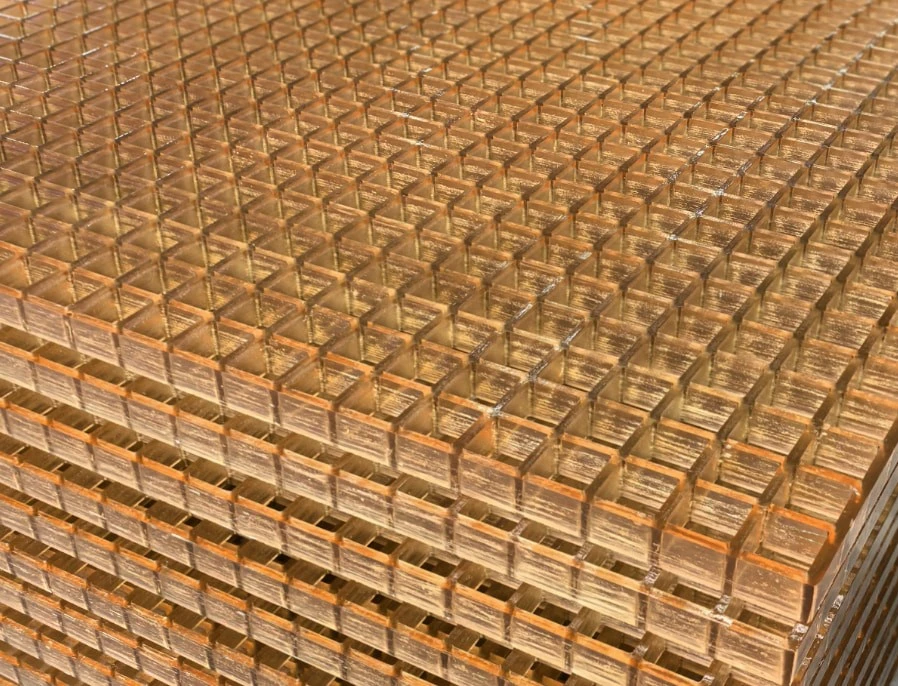
FRP grating, also known as fiberglass reinforced plastic grating, is a lightweight but high-strength composite material manufactured from fiberglass roving and resin through a molding process. The finished product forms a grid structure that offers high corrosion resistance, slip resistance, and excellent durability in harsh environments.
Compared with traditional steel grating, FRP grating provides several advantages:
- Corrosion resistance in chemical environments
- Lightweight but strong structure
- Non-conductive and non-magnetic
- Low maintenance costs
- Long service life
Why FRP Grating Sizes Matter
Choosing the correct FRP grating panel size is important for structural design, installation efficiency, and cost control. Standardized panel dimensions help reduce cutting waste, simplify logistics, and improve installation speed on industrial projects.
Most FRP grating manufacturers produce panels according to internationally accepted sizes, while also offering custom cutting or special dimensions for unique projects.
Most Common FRP Grating Panel Sizes
The following panel dimensions are widely used in international markets.
| Panel Size (mm) | Panel Size (ft) | Typical Application |
|---|---|---|
| 1220 × 3660 | 4 × 12 | Industrial platforms and walkways |
| 1000 × 4000 | 3.28 × 13.1 | Wastewater treatment plants |
| 1220 × 2440 | 4 × 8 | Small platforms and access covers |
| 915 × 3050 | 3 × 10 | Offshore maintenance walkways |
| 1524 × 3660 | 5 × 12 | Large equipment platforms |
Among these sizes, 1220 × 3660 mm (4 ft × 12 ft) is considered the most common FRP grating panel size used in industrial construction worldwide.
Common FRP Grating Mesh Sizes
The mesh opening size is another important specification that determines load capacity and safety performance.
| Mesh Size | Description | Typical Use |
|---|---|---|
| 38 × 38 mm | Standard square mesh | Industrial walkways |
| 50 × 50 mm | Large opening mesh | Drainage areas |
| 19 × 19 mm | Mini mesh | High-heel safe flooring |
| 25 × 100 mm | Rectangular mesh | Cooling tower platforms |
Common FRP Grating Thickness Options
Different thicknesses provide different load capacities. The most widely used thicknesses include:
- 25 mm (1 inch)
- 30 mm
- 38 mm (1.5 inch)
- 50 mm (2 inch)
- 65 mm heavy-duty grating
Among them, 38 mm FRP grating is the most common choice for industrial walkways because it offers a good balance between strength and weight.
Custom FRP Grating Sizes
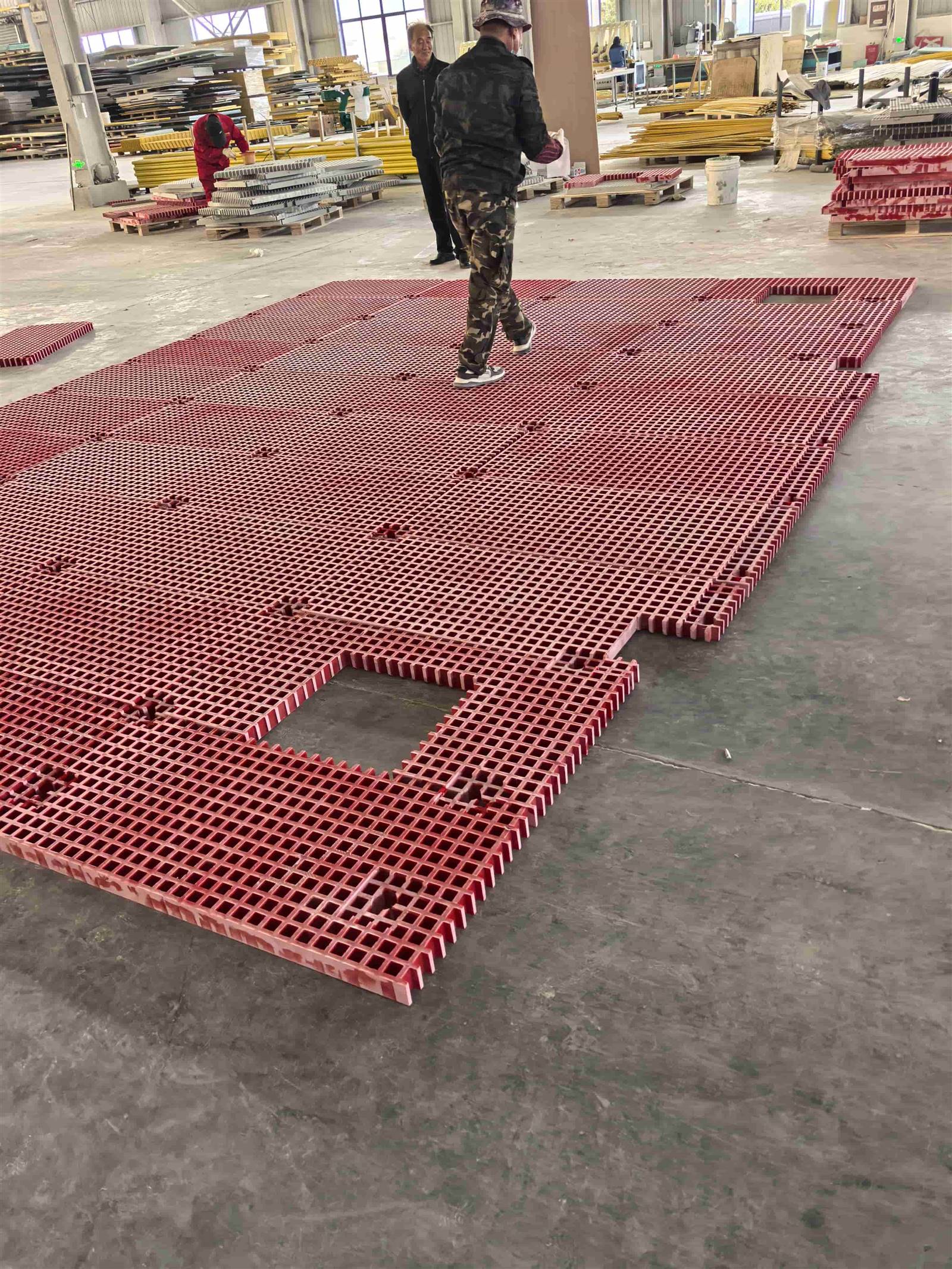
Although standard panel sizes are widely used, many industrial projects require customized solutions. Manufacturers can produce FRP grating with special sizes, shapes, and specifications according to engineering drawings.
Typical customization options include:
- Custom panel dimensions
- Cut-to-size grating panels
- Special mesh spacing
- Heavy-duty load designs
This flexibility allows FRP grating to fit complex equipment layouts and structural requirements.
Custom Colors for FRP Grating
Another advantage of fiberglass grating is color customization. Unlike steel grating, the color is integrated into the resin during manufacturing.
Common colors include:
- Yellow – safety walkways
- Green – chemical plants
- Gray – industrial flooring
- Orange – high-visibility areas
- Blue – marine applications
Custom colors can be produced to match project safety standards or corporate branding.
Conclusion
FRP grating is available in a variety of internationally recognized sizes, with 1220 × 3660 mm panels and 38 × 38 mm mesh being the most widely used configuration. These standardized dimensions simplify engineering design, installation, and global supply.
At the same time, manufacturers can provide customized sizes, colors, and load capacities to meet the needs of specific industrial applications.
By understanding the standard FRP grating sizes and available customization options, engineers and project buyers can select the most suitable fiberglass grating solution for long-term performance and safety.


