

Introduction
Reinforcement material selection is an important part of concrete construction, particularly in structures exposed to moisture, chlorides, deicing salts, or aggressive chemicals. Steel rebar has been widely used in reinforced concrete for decades, while fiberglass reinforced polymer (GFRP) rebar provides an alternative for applications where corrosion resistance and lightweight reinforcement are important considerations.
Fiberglass rebar and steel rebar are not interchangeable in every structural application. They have different mechanical properties, installation requirements, and design considerations. Choosing between them requires more than comparing initial material prices or tensile strength.
This guide explains the main differences between fiberglass rebar and steel rebar, their advantages and limitations, common applications, and the factors engineers should evaluate before specifying a reinforcement system.
1. What Is Fiberglass Rebar?
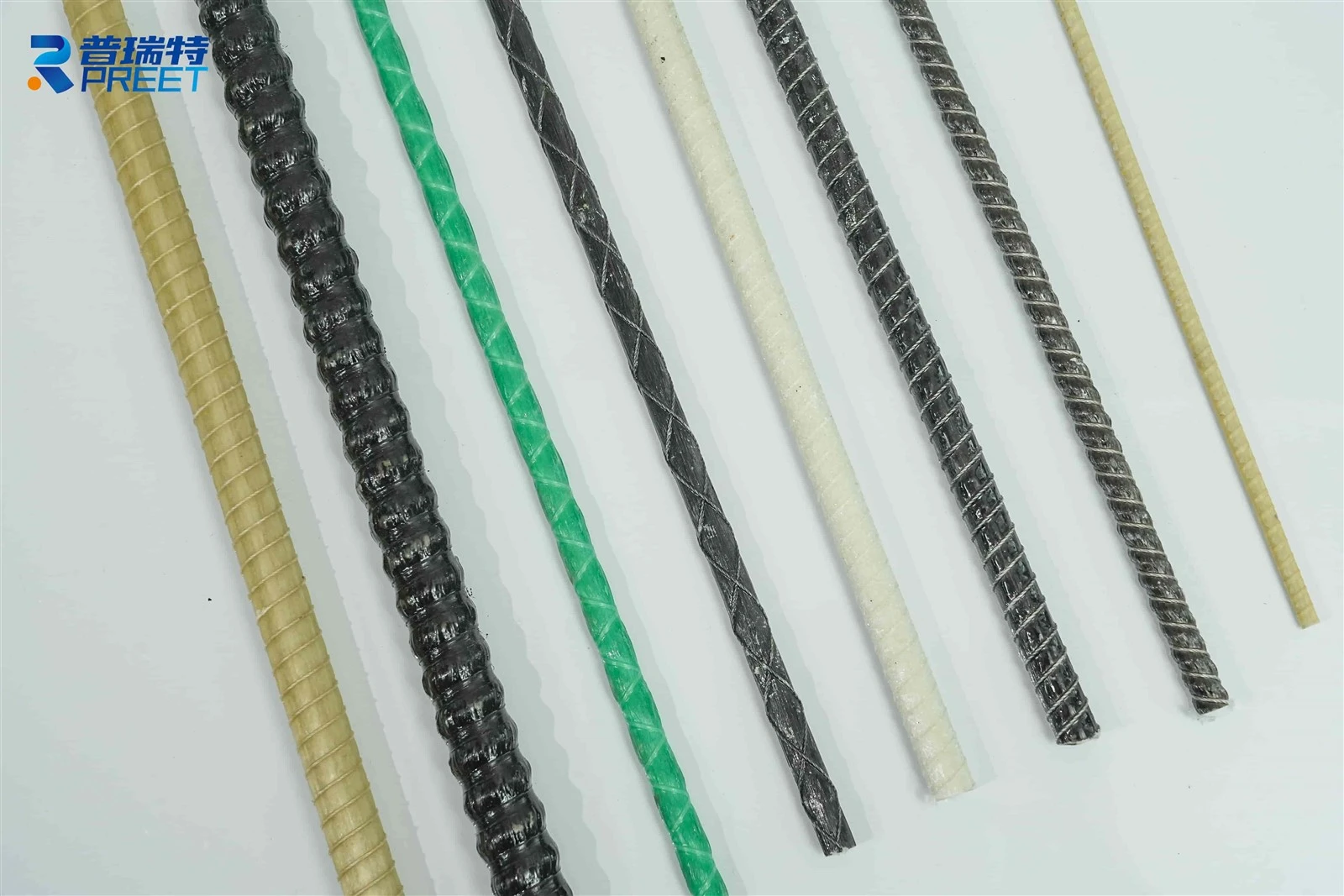
Fiberglass rebar, commonly called GFRP rebar, is a composite reinforcement product made from glass fibers embedded in a polymer resin matrix. The fibers provide tensile reinforcement, while the resin binds the composite and protects the reinforcement structure.
GFRP rebar is commonly manufactured through pultrusion, a continuous process in which fiber reinforcement is impregnated with resin and pulled through a forming and curing die. Surface treatments, such as helical ribs or sand coatings, may be used to improve bonding with concrete, depending on the product design.
Key Characteristics of GFRP Rebar
- Corrosion resistance: GFRP does not undergo the conventional electrochemical rusting process associated with carbon steel, although its long-term performance still depends on resin formulation, manufacturing quality, and exposure conditions.
- Low weight: Fiberglass rebar is generally lighter than steel reinforcement of comparable nominal dimensions, which can simplify handling and transportation.
- Electrical properties: GFRP is electrically non-conductive under normal conditions, a characteristic that can be useful in selected applications.
- Non-magnetic behavior: GFRP is generally non-magnetic, making it a candidate for projects with specific electromagnetic requirements.
- Different structural behavior: GFRP does not behave like ductile steel. Its stress-strain response and failure characteristics must be accounted for in structural design.
2. What Is Steel Rebar?
Steel rebar is a conventional reinforcement material manufactured from steel and commonly supplied with a ribbed surface to improve mechanical interlock with concrete. It is used in foundations, slabs, beams, columns, retaining walls, bridges, and many other reinforced-concrete structures.
Steel reinforcement is available in different grades and specifications. Its design properties depend on the applicable product standard, steel grade, bar dimensions, and project requirements.
Key Characteristics of Steel Rebar
- Established design practice: Steel reinforcement is covered by extensive structural design codes and widely used construction methods.
- Ductile behavior: Properly specified reinforcing steel can yield before failure, providing deformation characteristics that are important in many structural designs.
- High stiffness: Steel generally has a higher elastic modulus than GFRP, which affects member stiffness and crack control.
- Corrosion susceptibility: Carbon steel can corrode when protective conditions are compromised, particularly in the presence of moisture, oxygen, and chlorides.
- Magnetic and conductive properties: Steel conducts electricity and is ferromagnetic, which can be relevant to specialized installations.
3. Fiberglass Rebar vs Steel Rebar: Main Differences
The most appropriate reinforcement depends on the structural design, exposure conditions, serviceability requirements, construction method, and applicable codes. The following table summarizes general differences between the two materials.
| Comparison Factor | Fiberglass Rebar (GFRP) | Steel Rebar |
|---|---|---|
| Material | Glass fibers embedded in a polymer resin matrix | Steel alloy manufactured to the specified reinforcement grade |
| Corrosion behavior | Does not rust like carbon steel; durability depends on product and exposure conditions | Can corrode in aggressive environments if protection is insufficient |
| Weight | Generally lightweight | Generally heavier than GFRP of comparable nominal dimensions |
| Elastic modulus | Generally lower than steel; product-specific values must be checked | Generally higher than GFRP |
| Failure behavior | Typically linear elastic until rupture, without steel-like yielding | Ductile yielding can provide deformation before failure |
| Electrical behavior | Generally electrically non-conductive | Electrically conductive |
| Magnetic behavior | Generally non-magnetic | Carbon steel is ferromagnetic |
| Design approach | Requires GFRP-specific design provisions and product data | Uses established steel-reinforcement design provisions |
These comparisons are general. Actual mechanical properties, bond performance, durability, and suitability should be verified using the product's technical documentation and the governing design standard.
4. Corrosion Resistance and Service Environment
Exposure conditions are often a major factor when engineers evaluate fiberglass rebar. In reinforced concrete, steel corrosion can cause reinforcement expansion, cracking, delamination, and eventual deterioration when corrosion is not adequately controlled.
GFRP does not rust in the same way as carbon steel. This can make it attractive for concrete structures exposed to chlorides, persistent moisture, or certain corrosive environments. However, GFRP should not be described as immune to all forms of environmental degradation.
Applications Exposed to Chlorides
Bridges, parking structures, coastal infrastructure, and marine-related concrete structures may be exposed to chlorides from seawater or deicing salts. Where steel corrosion presents a significant durability concern, GFRP reinforcement may be evaluated as part of a corrosion-control strategy.
Wastewater and Chemical Environments
Concrete structures in wastewater treatment and industrial facilities can face moisture and chemical exposure. The suitability of GFRP depends on the specific environment, the concrete design, and the verified performance of the reinforcement product.
Evaluate the Complete Concrete System
Reinforcement selection is only one part of durability planning. Concrete mix design, cover depth, crack control, drainage, construction quality, and exposure classification remain important regardless of whether GFRP or steel is selected.
5. Mechanical Properties and Structural Design
Although GFRP rebar can offer high tensile strength relative to its weight, tensile strength alone does not determine the performance of a reinforced-concrete member. Engineers must consider stiffness, strain limits, bond behavior, anchorage, crack width, deflection, and the governing failure modes.
Elastic Modulus and Deflection
GFRP generally has a lower elastic modulus than steel. As a result, a concrete member reinforced with GFRP may exhibit different crack widths and deflection behavior under service loads. Reinforcement area and member dimensions may need to be adjusted to meet the applicable serviceability requirements.
Yielding and Failure Behavior
Unlike conventional ductile steel reinforcement, GFRP generally behaves elastically until rupture. It does not provide the same yielding plateau that structural designers commonly use when assessing steel-reinforced members.
For this reason, GFRP-reinforced concrete must be designed using an appropriate code and a failure-mode assessment suited to the composite reinforcement. Steel reinforcement design equations should not simply be reused without checking their applicability.
Bond, Development Length, and Anchorage
The bond between GFRP bars and concrete depends on the bar surface, manufacturing process, concrete properties, and installation conditions. Development length, lap splices, bends, and anchorage details should follow the applicable design provisions and manufacturer data.
GFRP bars also have product-specific limits for bending and fabrication. Do not assume that a bar can be bent on site in the same manner as steel rebar.
6. Common Applications of Fiberglass Rebar
GFRP reinforcement is most relevant where its corrosion resistance, low weight, or non-magnetic characteristics address a specific project requirement. It should be selected through engineering evaluation rather than on material properties alone.
Bridge Decks and Transportation Infrastructure
Bridge decks and related concrete components may be exposed to deicing salts, water, and repeated environmental cycles. GFRP may be considered where corrosion resistance is a priority and the project design meets the applicable structural requirements.
Coastal and Marine Structures
Coastal infrastructure can experience saltwater exposure and chloride-rich conditions. GFRP reinforcement may be suitable for selected components where the designer has verified the required structural performance and durability.
Parking Structures and Concrete Slabs
Parking decks and slabs exposed to deicing salts or water infiltration can present corrosion challenges for steel reinforcement. GFRP can be evaluated as an alternative where the design accounts for its stiffness, serviceability, and detailing requirements.
Specialized Non-Magnetic Facilities
Some medical, research, and industrial facilities have specific electromagnetic requirements. The non-magnetic properties of GFRP may be advantageous in selected locations, subject to the project's electrical, structural, and safety criteria.
7. When Is Steel Rebar the Better Choice?
Steel remains a practical and widely specified reinforcement material for many structures. Its established design procedures, ductile behavior, high stiffness, broad availability, and familiar construction methods can make it suitable for projects where corrosion exposure is manageable and conventional detailing is preferred.
Steel may be appropriate when:
- The structural design relies on steel's yielding behavior and established ductility provisions.
- Existing project specifications or codes require conventional steel reinforcement.
- The exposure conditions can be addressed through concrete design, adequate cover, protective measures, and appropriate maintenance.
- The construction team, fabrication process, and inspection procedures are organized around conventional steel reinforcement.
The choice should reflect the entire design and lifecycle context, not a blanket assumption that one material is always superior.
8. How to Choose Between Fiberglass Rebar and Steel Rebar
A systematic selection process helps engineers compare the materials based on project requirements rather than isolated product claims.
Step 1: Identify the Exposure Conditions
Determine whether the structure will face chlorides, seawater, industrial chemicals, persistent moisture, temperature extremes, or other durability challenges. Confirm that the proposed GFRP product is suitable for the intended exposure.
Step 2: Establish Structural and Serviceability Requirements
Define the design loads, member dimensions, crack-width limits, deflection criteria, fire requirements, and relevant structural performance objectives. These requirements should be evaluated using the correct design provisions for the selected reinforcement material.
Step 3: Check Applicable Codes and Approvals
Confirm that the project jurisdiction and specification permit the proposed reinforcement system. Review applicable design standards, product qualification requirements, and required test documentation before finalizing the material choice.
Step 4: Review Product Specifications
For GFRP rebar, request the nominal diameter, tensile properties, elastic modulus, bond-related information, resin or material details, dimensional tolerances, and applicable test reports. Verify that the information matches the exact product being offered.
Step 5: Compare Lifecycle Costs
Compare more than the purchase price. Depending on the project, the assessment may include handling, transportation, installation, corrosion protection, inspection, maintenance, and potential future repair. The outcome will vary with the design, environment, and service-life assumptions.
9. Questions to Ask a Fiberglass Rebar Manufacturer
Before ordering GFRP reinforcement, project teams should confirm that the supplier can provide the documentation required for design approval and construction.
- What bar diameters, surface patterns, and product configurations are available?
- Can you provide verified mechanical properties and the applicable test reports?
- Which standards and qualification requirements does the product meet?
- What are the permitted handling, cutting, bending, storage, and installation procedures?
- Can the supplier provide traceability and quality documentation for the order?
- Are product-specific recommendations available for the intended concrete application?
Manufacturers' claims should be checked against documented product data and the project specification. Do not assume that all GFRP bars have identical properties or that a single product is suitable for every exposure condition.
For additional guidance on evaluating suppliers, read our article How to Choose a Fiberglass Rebar Manufacturer.
Conclusion
Fiberglass rebar and steel rebar serve different design needs. GFRP can offer corrosion resistance, low weight, and non-magnetic properties, while steel provides established design methods, high stiffness, and ductile yielding behavior.
The best option depends on exposure conditions, structural requirements, serviceability limits, applicable codes, installation methods, and lifecycle considerations. Engineers should verify product properties and use the appropriate design provisions rather than selecting reinforcement based on tensile strength or price alone.
For projects where corrosion resistance is a priority, GFRP rebar may be worth evaluating alongside conventional steel reinforcement. A qualified structural designer should confirm the final selection and detailing requirements.
Contact PREET Grating
Looking for fiberglass reinforcement products or technical information for your project? Share your application, required dimensions, project standards, and exposure conditions with our team to discuss product availability and specifications.
WhatsApp: Contact us on WhatsApp
Email: info@preet.cn


