

What Are FRP Handrail Systems?
Industrial handrails play an important role in protecting personnel around elevated walkways, access platforms, staircases, and maintenance areas. In environments exposed to moisture, chemicals, or outdoor weather, conventional metal railing systems may require regular inspection, protective coatings, or corrosion maintenance.
FRP handrail systems provide an alternative made from fiberglass reinforced plastic. These systems typically use pultruded FRP profiles for posts, horizontal rails, and other structural members, together with suitable connectors and mounting hardware. The exact configuration depends on the installation environment, railing height requirements, design loads, and applicable safety regulations.
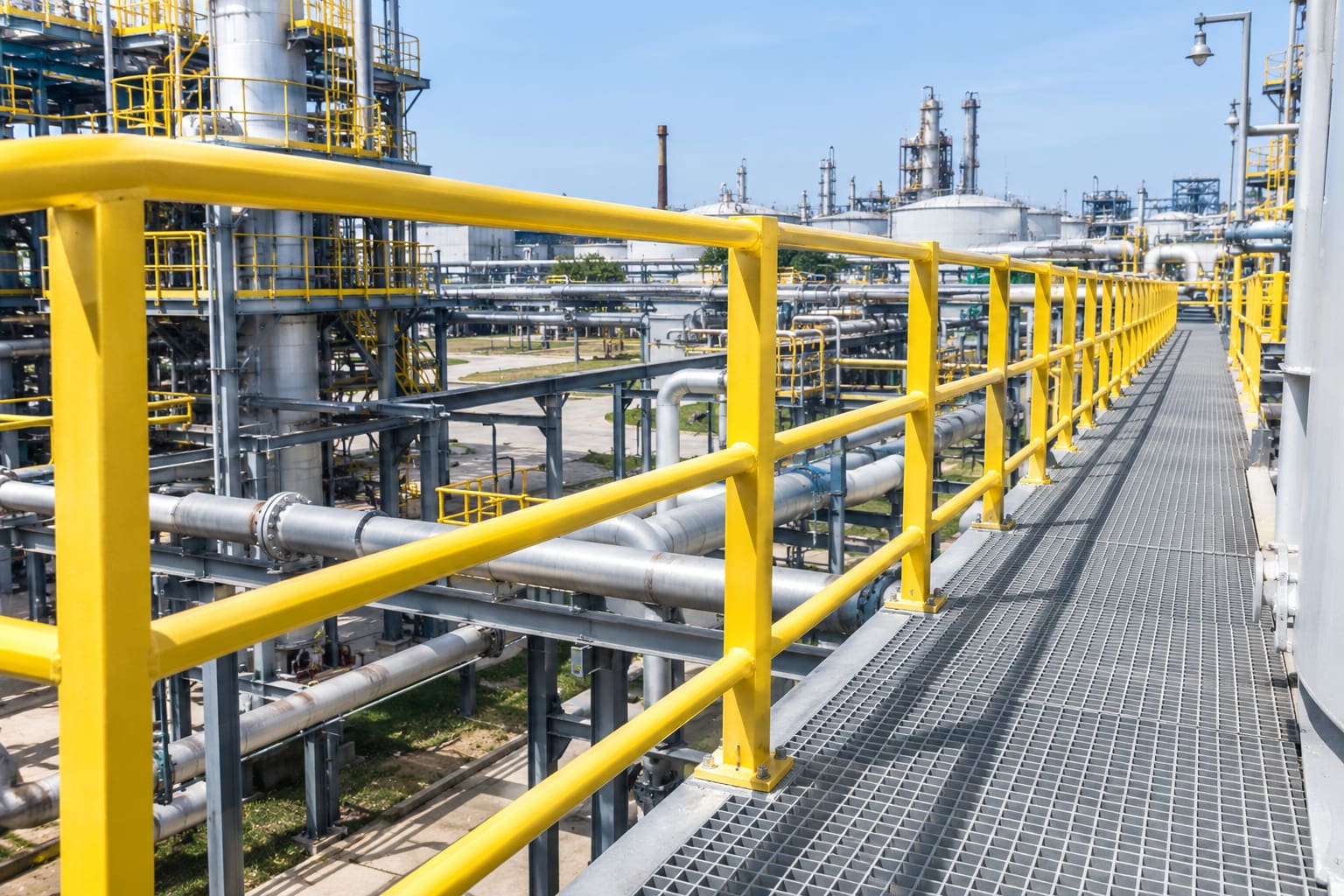
For projects requiring lightweight, corrosion-resistant structural components, FRP pultrusion profiles can be considered for railing and related support structures.
1. Main Components of an FRP Handrail System
A complete FRP railing system consists of several components that work together. Selecting each component according to the project requirements is essential for a stable and functional installation.
| Component | Function | Selection Considerations |
|---|---|---|
| Handrail | Provides a continuous gripping surface along the railing. | Profile shape, grip comfort, continuity, and environmental exposure. |
| Posts | Support the handrail and transfer forces to the supporting structure. | Profile dimensions, post spacing, connection details, and design loads. |
| Intermediate rails | Help close openings within the railing system. | Required spacing and applicable fall-protection requirements. |
| Connectors and brackets | Join profiles and connect the railing to the supporting structure. | Compatibility, fastener material, corrosion exposure, and connection strength. |
| Base plates and anchors | Secure posts to the platform, floor, or supporting frame. | Substrate strength, edge distances, anchor type, and installation conditions. |
Component availability and connection methods vary by system. Before ordering, confirm whether the supplier provides individual profiles, prefabricated railing sections, connection accessories, or a complete customized assembly.
2. Why Consider Fiberglass for Industrial Handrails?
Corrosion Resistance
FRP does not rust in the same way as carbon steel. Depending on the resin system and product specification, fiberglass profiles can be suitable for many damp, coastal, wastewater, and chemically aggressive environments. Chemical compatibility should always be checked against the actual substances, concentrations, temperatures, and exposure conditions at the site.
Lightweight Construction
FRP profiles are generally lighter than comparable metal components, which can make handling and positioning easier during installation. The finished railing must still be engineered for the required loads, and a low component weight should never be treated as proof of structural adequacy.
Electrical Insulation
Fiberglass composite profiles are non-metallic and can provide electrical insulation. This characteristic may be useful around electrical facilities, but it does not automatically make a complete railing system electrically safe. Resin formulation, moisture, contamination, fittings, and the entire installation must be considered where electrical hazards exist.
Reduced Routine Corrosion Maintenance
Unlike unprotected carbon steel, FRP does not require repainting simply to prevent rust. Periodic inspections are still necessary to identify damaged profiles, loose connections, impact damage, surface deterioration, and changes in the supporting structure.
3. Common Applications of FRP Handrail Systems
Chemical and Petrochemical Plants
FRP railings may be used around process platforms, equipment access areas, and maintenance walkways where chemical exposure makes material selection particularly important. The selected resin and complete assembly must be compatible with the operating environment.
Water and Wastewater Treatment Facilities
Wet operating conditions and exposure to treatment chemicals can create challenging maintenance conditions for metal structures. FRP handrails can be considered for access platforms, tank surroundings, pump stations, and maintenance areas when the design meets the facility's safety requirements.
Marine and Coastal Facilities
Salt-laden air and moisture can accelerate corrosion of conventional metal components. Properly specified FRP profiles may offer a useful alternative for selected walkways, access platforms, and coastal industrial structures.
Industrial Walkways and Elevated Platforms
Handrails are frequently installed alongside FRP grating walkways and maintenance platforms. In these applications, the railing posts and their connections must be coordinated with the platform framing so that loads are transferred safely into the supporting structure.
For platform flooring applications, see FRP walkway grating.
4. How to Select the Right FRP Handrail Profiles
Choosing an FRP handrail involves more than selecting a profile that fits the intended layout. The railing is a safety-related assembly, so its dimensions, connections, support conditions, and material properties must be assessed together.
Step 1: Define the Installation Environment
Identify whether the railing will be installed indoors or outdoors and whether it will face salt spray, ultraviolet exposure, cleaning agents, process chemicals, high humidity, or frequent temperature changes. Use these conditions to establish the required resin system and environmental resistance.
Step 2: Confirm Applicable Safety Requirements
Determine the required railing height, intermediate rail or infill arrangement, opening limitations, handrail continuity, and design loads under the applicable local codes and project specifications. Requirements can vary by facility type, jurisdiction, and intended use.
Step 3: Choose Suitable Profile Shapes
Pultruded FRP profiles are available in shapes such as square tubes, rectangular tubes, round tubes, angles, and channels. Different shapes offer different connection and structural characteristics. The appropriate profile depends on the design, not simply on its external dimensions.
Explore available options in the FRP pultruded profiles range, including the FRP square tube and fiberglass rectangular tube product pages.
Step 4: Verify Structural Performance
Check the expected loads, post spacing, unsupported rail spans, profile stiffness, connection strength, and support-frame capacity. Obtain the relevant product data and engineering calculations before approving the design. Do not assume that a profile suitable for one railing layout will perform equally well in another.
Step 5: Review Connections and Installation Details
Confirm how posts attach to the platform, how rails connect to posts, and whether the proposed brackets and fasteners are suitable for the environment. Connections require particular attention because their performance can govern the capacity of the assembled railing.
5. FRP Handrails vs. Metal Handrails
| Factor | FRP Handrails | Metal Handrails |
|---|---|---|
| Corrosion behavior | Does not rust like carbon steel; chemical compatibility still matters. | Depends on the metal, coating, exposure, and maintenance. |
| Weight | Generally lightweight for handling and installation. | Varies by metal type and section dimensions. |
| Electrical properties | Non-metallic; system-level electrical safety still requires assessment. | Metallic and electrically conductive. |
| Fabrication | Cutting and connection methods must follow FRP-specific procedures. | May use welding, machining, bolting, or other metalworking methods. |
| Design verification | Requires composite-specific properties and connection checks. | Requires checks based on the selected metal and connection design. |
Neither material is the best choice for every project. The right solution depends on the required structural performance, environmental exposure, installation method, applicable standards, and total lifecycle cost.
6. Installation and Maintenance Considerations
Proper installation is essential to the performance of an FRP handrail system. Before installation begins, check the following items:
- Verify the dimensions and layout against approved drawings.
- Confirm that the supporting platform or frame can resist the loads transferred by the railing.
- Use compatible brackets, fasteners, and connection components.
- Follow the manufacturer's instructions for cutting, drilling, edge finishing, and fastening FRP profiles.
- Inspect connections and verify that the installed railing meets the project requirements.
- Establish a periodic inspection plan for loose fasteners, damaged profiles, impact marks, and deterioration.
Any damaged or modified structural member should be assessed before the railing is returned to service. Do not rely on visual appearance alone to determine whether a safety-related component remains adequate.
7. What to Ask an FRP Handrail Supplier
Before requesting a quotation, prepare the information needed to evaluate the proposed solution:
- Project location and operating environment.
- Required railing layout, approximate lengths, and installation drawings.
- Applicable codes, railing heights, and design loads.
- Preferred profile shapes, colors, and surface requirements.
- Connection details and supporting structure information.
- Required technical data, samples, fabrication, and delivery arrangements.
Ask the supplier to confirm the available profile dimensions, resin system, relevant mechanical properties, manufacturing tolerances, and suitable connection methods. If a complete railing assembly is required, clarify whether design assistance, fabrication, accessories, and installation documentation are included.
Conclusion
FRP handrail systems can be a practical option for industrial walkways, access platforms, chemical facilities, wastewater plants, and coastal installations where corrosion resistance and lightweight construction are important. Successful selection depends on matching the profile material, structural design, connections, and installation details to the actual project conditions.
Preet supplies FRP grating and pultruded profile products for industrial applications. Contact the team to discuss profile availability and the technical information needed for your railing project.
Contact Preet for FRP Profile Solutions
For product information, profile dimensions, or project-specific requirements, contact us:
WhatsApp: +86 138 5147 5666
Email: info@preet.cn
Share your application, drawings, and technical requirements so the suitable FRP profile options can be reviewed for your project.


