

What Are FRP Stair Treads?
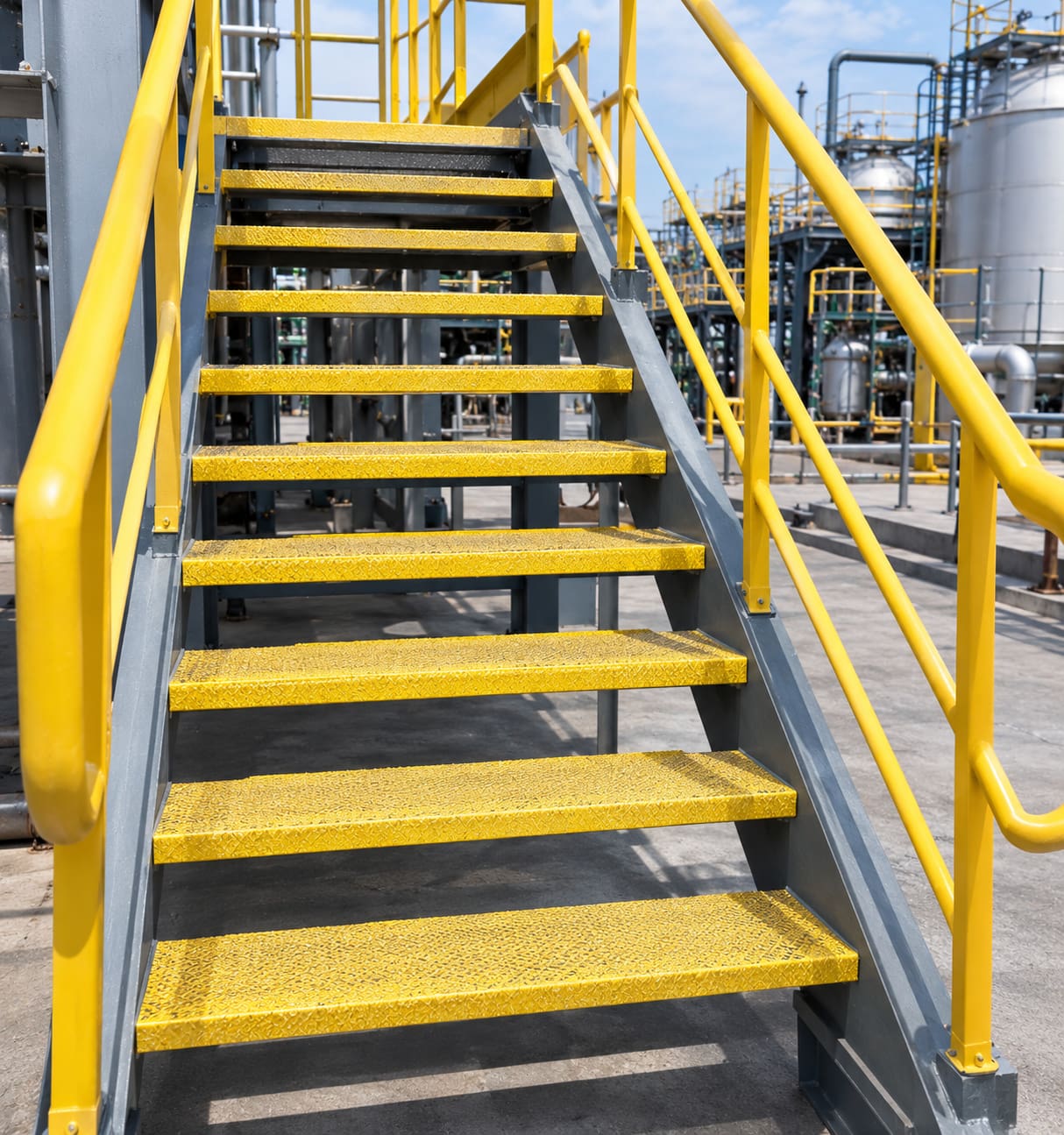
FRP stair treads are step components made from fiberglass-reinforced plastic (FRP). They are used in industrial stairways, access platforms and maintenance structures where a combination of corrosion resistance, manageable weight and slip-resistant footing may be required.
Unlike conventional metal stair treads, FRP stair treads use a composite material made from fiberglass reinforcement and a polymer resin system. Depending on the product design, the tread may incorporate an open-grid structure, a molded profile or a surface treatment intended to improve traction.
Choosing the right stair tread requires more than checking its appearance. Buyers should consider the stairway design, required dimensions, surface conditions, support arrangement, fastening method and operating environment.
Why Are FRP Stair Treads Used in Industrial Facilities?
Industrial stairways can be exposed to moisture, cleaning chemicals, corrosive atmospheres and frequent foot traffic. FRP stair treads may be suitable for selected environments where conventional metal components require ongoing corrosion protection.
- Corrosion resistance: The suitability of FRP for a particular environment depends on the resin system and the chemicals or substances encountered during service.
- Anti-slip surface options: Some products incorporate textured or grit-coated surfaces to improve traction under specified conditions.
- Relatively low weight: FRP components can be easier to handle than comparable metal components, depending on their dimensions and construction.
- Electrical insulation: FRP is generally electrically insulating, which may be relevant in selected facilities. The complete installation must still meet applicable electrical safety requirements.
- Reduced corrosion-related maintenance: Suitable FRP products do not rust like unprotected steel, although inspection and maintenance are still necessary.
These characteristics do not mean every FRP stair tread is appropriate for every industrial application. The selected product must meet the project's mechanical, environmental and safety requirements.
Common Types of FRP Stair Treads
FRP stair tread designs can vary according to their manufacturing method, cross-section and surface treatment. Confirm the actual product construction with the supplier before specifying a tread.
Molded FRP Stair Treads
Molded FRP stair treads are manufactured using a molding process. Depending on the product design, they may have an open-grid structure that allows liquids and debris to pass through the tread.
Open-grid construction may be useful in some wet or washdown environments, but the suitability of the opening size, surface texture and tread configuration should be assessed for the intended use.
Pultruded FRP Stair Treads
Pultruded FRP products are made using a continuous process that forms fiberglass reinforcement and resin into a defined profile. Stair tread systems using pultruded components may have a different structural arrangement from molded products.
When evaluating a pultruded stair tread, check the bearing direction, support arrangement, cross-section and relevant product-specific load data. Do not assume that molded and pultruded treads are interchangeable.
FRP Stair Treads with Anti-Slip Surfaces
Depending on the product range, FRP stair treads may be available with textured surfaces or an applied grit finish. These features are intended to improve traction, but their effectiveness depends on the surface design and the conditions encountered during service.
For areas exposed to water, oils, dust or process residues, ask the manufacturer which surface option is suitable. Also consider cleaning methods and the need to inspect the walking surface over time.
How to Choose the Right FRP Stair Tread Dimensions
Correct dimensions are essential for compatibility with the staircase structure and for providing a consistent walking surface. Before ordering, identify the following measurements and requirements.
1. Tread Width and Depth
Confirm the required walking-surface dimensions using the staircase drawings and applicable project requirements. The tread must fit the intended stair geometry without creating an unsuitable edge, gap or overhang.
2. Tread Thickness and Profile
The thickness and cross-section influence how the tread fits its support structure. Specify the product thickness and profile using the manufacturer's drawing rather than relying on a visual estimate.
3. Stair Width and Quantity
Provide the required stair width, number of steps, quantity per staircase and total project quantity. If several stairways are involved, identify any differences in dimensions or installation conditions.
4. Fixing and Edge Details
Confirm the location of mounting holes, support members, brackets and any leading-edge or nosing features. If the project requires a specific hole pattern or cutout, provide a drawing for review before production.
Specification note: Available sizes, thicknesses, colors, load ratings and hole patterns vary by product. Confirm the current PREET product specifications before including exact values in a purchase order.
Anti-Slip Performance: What Should You Check?
Slip resistance is a key consideration when selecting industrial stair treads. The appropriate surface depends on the expected contaminants, footwear, drainage conditions, cleaning practices and applicable safety requirements.
Surface Texture
Textured and grit-coated surfaces may help improve traction compared with a smooth surface. However, surface appearance alone does not establish a measured slip-resistance rating. If a project requires a specific test result or performance class, request the relevant test documentation from the manufacturer.
Moisture and Contamination
Water, oil, grease, mud and process residues can change the traction available on a walking surface. Identify the actual contaminants expected on the stairs and ask whether the proposed tread surface is suitable for those conditions.
Drainage and Cleaning
Open-grid treads can allow liquids and some debris to pass through, while solid or covered surfaces behave differently. Consider how the stairs will be cleaned, whether residues can accumulate and whether the tread geometry supports the facility's housekeeping procedures.
Inspection and Replacement
Include the stair treads in routine inspections. Look for damaged surfaces, loose fasteners, cracking, excessive wear and other conditions that could affect safe use. Repair or replace components according to the manufacturer's guidance and site safety procedures.
FRP Stair Treads vs. Steel Stair Treads
FRP and steel stair treads have different material characteristics. The better choice depends on the environment, structural requirements, maintenance strategy and total installed cost.
| Comparison Factor | FRP Stair Treads | Steel Stair Treads |
|---|---|---|
| Corrosion management | Can provide corrosion resistance when the material system suits the environment | May require coatings or other corrosion protection, depending on the steel and exposure |
| Weight | Often relatively lightweight; compare actual product weights | Depends on steel grade and tread construction |
| Electrical properties | Generally electrically insulating | Electrically conductive |
| Surface options | May include molded textures or grit-coated surfaces | May include serrated, perforated or other anti-slip designs |
| Design verification | Requires suitable FRP product data and connection checks | Requires suitable steel product data and connection checks |
A meaningful comparison should include the complete stair system, not just the tread material. Consider the supporting structure, mounting hardware, installation effort, corrosion protection, inspection and replacement requirements.
How to Install FRP Stair Treads
The correct installation procedure depends on the tread design and staircase structure. Always follow the approved drawings, manufacturer instructions and applicable site safety requirements.
- Verify the staircase dimensions. Check the support spacing, stair width, mounting locations and required clearances against the approved drawings.
- Inspect the treads and supports. Confirm that components match the specification and are free from damage before installation.
- Position the tread. Place the tread on its intended supports and check its alignment and bearing.
- Install the specified fasteners. Use the approved brackets, clips, bolts or other attachment components suitable for the tread and support structure.
- Check the completed connection. Verify that the tread is secured correctly and that fasteners are installed according to the specified procedure.
- Inspect the walking surface. Check for damage, unsuitable gaps, sharp edges, loose parts or other visible issues before opening the stairs for use.
Do not drill additional holes, change the support arrangement or modify the tread profile without confirming that the proposed change is acceptable. Unapproved modifications can affect the product and connection performance.
Where Are FRP Stair Treads Used?
Chemical Processing Facilities
Stairways in chemical plants may be exposed to corrosive vapors, splashes and cleaning agents. FRP treads may be considered where the selected resin system is compatible with the exposure conditions.
Wastewater Treatment Plants
Wastewater facilities often contain wet access routes and maintenance platforms. When selecting FRP treads, review traction, drainage, chemical exposure and the requirements for inspection and cleaning.
Power Plants and Electrical Facilities
FRP stair treads may be considered for selected access structures where electrical insulation is a design consideration. The staircase, supports and all associated components must still comply with the project's electrical and structural safety requirements.
Marine and Coastal Facilities
Marine and coastal environments can expose stair components to salt-laden moisture and changing weather conditions. Confirm the suitability of the FRP material, fastening hardware and supporting structure for the actual environment.
Industrial Platforms and Maintenance Access
FRP stair treads can form part of compatible access systems around equipment and elevated platforms. The tread must be selected together with the staircase structure, support conditions and required design loads.
What Information Should You Provide When Requesting a Quote?
To help a supplier recommend a suitable FRP stair tread, prepare the following information:
- Stairway location and intended application.
- Required tread width, depth, thickness and profile.
- Number of steps and total quantity.
- Support structure and mounting arrangement.
- Required surface texture or anti-slip specification.
- Operating environment, including moisture and chemical exposure.
- Required load information and applicable design criteria.
- Drawings, photographs or existing product references.
- Color, cutting, packaging and delivery requirements.
If the project involves replacing existing stair treads, provide photographs and measurements of the current components. Confirm compatibility before ordering replacement parts.
Explore Related FRP Products
FRP stair treads are often part of a broader industrial access system. Explore related PREET products to coordinate the walking surface, supporting profiles and installation accessories.
- FRP Grating – explore fiberglass grating for compatible walkways and platforms.
- Molded FRP Grating – review molded grating options for industrial applications.
- Anti-Slip FRP Grating – explore grating surfaces intended for applications where traction is important.
- FRP Pultrusion Profiles – review fiberglass profiles that may be used in compatible support structures.
Confirm product compatibility, load requirements and installation details before combining components into a complete access system.
Frequently Asked Questions
Are FRP stair treads suitable for wet environments?
They may be suitable when the selected tread surface and material system are appropriate for the actual conditions. Review traction requirements, drainage, contaminants and chemical exposure before specifying the product.
Do all FRP stair treads have anti-slip surfaces?
No. Surface designs vary by product. Confirm the available surface finish and request test documentation if the project requires a specific slip-resistance performance.
Can FRP stair treads be cut to size?
Some products may be cut to suit a project, but the permitted cutting method and any finishing requirements should be confirmed with the manufacturer. Cutting must not compromise the tread's required structure or connections.
How do I determine the load capacity of an FRP stair tread?
Load capacity depends on the tread design, material properties, support spacing, load distribution, connections and other project conditions. Request product-specific technical data and engineering verification rather than estimating capacity from dimensions alone.
Can FRP stair treads be installed on existing steel stairs?
They may be suitable for some retrofit projects, provided the tread dimensions, support arrangement and attachment method are compatible. Inspect the existing structure and confirm the proposed installation with the supplier and responsible project engineer.
Conclusion
FRP stair treads can be considered for industrial access systems where corrosion resistance, manageable weight and suitable walking-surface characteristics are important. Selecting the right product requires attention to dimensions, surface design, support conditions, fastening details and the operating environment.
Before placing an order, confirm the manufacturer's technical specifications and provide clear project drawings. For structural or safety-critical installations, verify the tread and complete staircase design against the applicable requirements.
Contact PREET for FRP Stair Tread Information
Looking for fiberglass stair treads for an industrial project? Send PREET your required dimensions, quantity, application details and drawings to discuss available options and technical requirements.
WhatsApp: Contact PREET on WhatsApp
Email: info@preet.cn


