

What Is an FRP U Channel?
An FRP U channel is a U-shaped structural profile made from fiberglass-reinforced polymer. Its cross-section typically consists of a web and two side flanges, creating an open channel shape that can be incorporated into compatible frames, supports and industrial assemblies.
FRP stands for fiberglass-reinforced plastic. Compared with conventional metal profiles, FRP profiles may offer advantages in applications where corrosion resistance, relatively low weight or electrical insulation is important. Actual performance depends on the material formulation, profile design and operating environment.
FRP U channels are used in a range of industrial settings, including electrical facilities, chemical processing areas, wastewater treatment plants and selected marine structures. The right profile should be chosen according to its intended function, connection details and verified technical specifications.
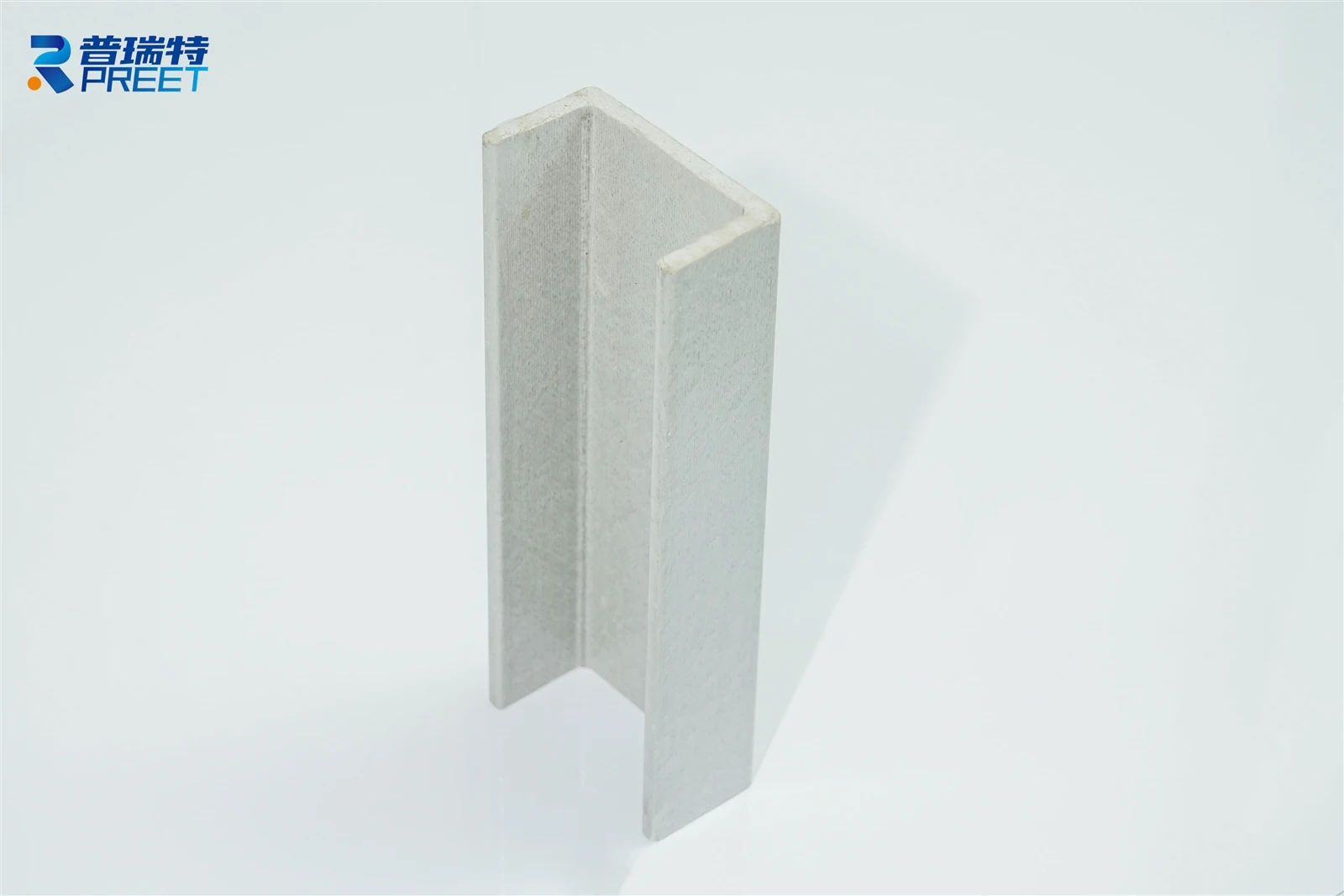
How Is an FRP U Channel Designed?
The defining feature of a U channel is its open cross-section. The web forms the base of the channel, while the two flanges extend from the sides. This geometry can provide a convenient arrangement for supporting or connecting compatible components.
When specifying an FRP U channel, the overall shape is only the starting point. Buyers and engineers should review the complete cross-section, including the following features:
- Overall width: The external distance across the channel flanges.
- Overall height: The distance from the outside of the web to the top of the flanges.
- Wall thickness: The thickness of the web and flanges, which may differ depending on the profile design.
- Internal dimensions: The available space inside the channel for mating parts or connected components.
- Length and cutting requirements: The required piece length and any processing needed for installation.
- Surface finish: The finish required for the application and specified by the supplier.
Do not assume that all FRP U channels have identical web and flange thicknesses or standardized dimensions. Request a product drawing and confirm the exact specification with the manufacturer before ordering.
How Are FRP U Channels Manufactured?
Pultrusion is a common manufacturing method for continuous FRP structural profiles. During the process, fiberglass reinforcement is combined with a resin system and formed through a die to produce a profile with a defined cross-section.
For an FRP U channel, the manufacturing process must maintain the specified channel geometry and dimensions. Consistency is particularly important when the profile needs to connect with other members, fit within an existing frame or be assembled into a larger structure.
When evaluating a supplier, ask about:
- The available U-channel profiles and their technical drawings.
- The resin and reinforcement system offered for the intended environment.
- Dimensional tolerances and inspection procedures.
- Available lengths, cutting services and customization options.
- Technical documentation relevant to the intended application.
The manufacturing method alone does not establish a profile's load capacity or suitability for a particular chemical environment. Those factors require product-specific information.
Industrial Applications of FRP U Channels
1. Electrical Facilities and Cable Support Systems
FRP channels may be considered for selected supports and framing components in electrical facilities where electrical insulation is an important design consideration. Their suitability depends on the complete installation, the electrical requirements and the mechanical demands placed on the profile.
Where a channel forms part of a cable support system, confirm the required loading, support spacing, fixing method and compatibility with the other system components. Do not treat the non-conductive nature of the material as a substitute for electrical system design and safety procedures.
2. Chemical Processing and Wastewater Treatment
Chemical plants and wastewater treatment facilities can expose structural components to moisture, corrosive substances and demanding operating conditions. FRP channels may be suitable for selected framing or support applications where the specified composite material is compatible with the environment.
Before selecting a profile, identify the chemicals involved, their concentrations, the operating temperature and the expected exposure duration. Confirm the resin system's compatibility with the manufacturer rather than relying on a general statement that FRP is corrosion-resistant.
3. Industrial Walkways and Platforms
FRP channels can be incorporated into certain industrial framing and support assemblies. Where used around walkways or platforms, the channel's role in the structure must be clearly defined, including its connections to other members.
For load-bearing applications, the design should account for the actual loads, unsupported length, restraint conditions, connection details and allowable deflection. Product dimensions alone are not enough to determine whether a channel is suitable for a structural span.
4. Marine and Coastal Structures
In marine and coastal environments, moisture and salt exposure can create corrosion challenges for conventional metal components. FRP channels may be considered for compatible structural or support applications, provided the material system and connections are suitable for the service conditions.
For outdoor installations, also review ultraviolet exposure, temperature changes, water ingress at connections and the inspection requirements for the complete assembly.
FRP U Channel vs. FRP C Channel
The terms U channel and C channel are sometimes used for similar open-channel profiles. Naming conventions can vary by supplier, so the product name alone may not establish the exact geometry.
| Comparison Point | FRP U Channel | FRP C Channel |
|---|---|---|
| Basic shape | Open channel with a web and two flanges | Open channel with a web and two flanges |
| Naming | Often emphasizes the U-shaped cross-section | Often emphasizes the C-shaped cross-section |
| Geometry to verify | Web, flange dimensions, thickness and internal opening | Web, flange dimensions, thickness and any profile-specific geometry |
| Selection basis | Actual drawing, installation space and design requirements | Actual drawing, installation space and design requirements |
In some product ranges, the two terms may refer to closely related or overlapping profile shapes. Confirm the supplier's drawing, dimensions and product designation before assuming that a U channel and a C channel are interchangeable.
FRP U Channel vs. Steel Channel
FRP and steel channels differ in material properties, fabrication requirements and performance under specific service conditions. The best option depends on the priorities of the project rather than on a single material characteristic.
| Factor | FRP U Channel | Steel Channel |
|---|---|---|
| Corrosion considerations | Can offer corrosion resistance when the resin system is compatible with the environment | Corrosion protection may be required depending on the grade and exposure |
| Electrical behavior | Generally electrically insulating | Electrically conductive |
| Weight | Often lighter than a comparable steel component, but compare actual section weights | Depends on steel grade and cross-section |
| Structural design | Requires FRP-specific material data and design checks | Requires steel-specific material data and design checks |
| Connections and fabrication | Connection details and machining procedures must suit the composite profile | Common steel fabrication methods may be available, subject to the design |
For a fair comparison, evaluate the complete assembly, including profile dimensions, fasteners, coatings, installation labor, maintenance and replacement requirements. Do not compare profiles based only on nominal size or purchase price.
How to Select the Right FRP U Channel
Define the Application
Start by identifying whether the channel will be used for framing, equipment support, cable management or another function. The application determines which technical properties and installation details must be reviewed.
Confirm the Cross-Section
Specify the required width, height, web thickness, flange thickness and internal opening. A dimensioned drawing is the clearest way to avoid confusion between similarly named profiles.
Evaluate the Service Environment
Describe moisture, chemicals, ultraviolet exposure and operating temperature. Ask the manufacturer to confirm whether the proposed resin and reinforcement system are appropriate for the stated conditions.
Check the Mechanical Requirements
For structural applications, provide the expected loads, span, support arrangement and connection details. Obtain relevant material properties and product-specific engineering data before finalizing the design.
Review Installation and Maintenance
Confirm how the channel will be cut, drilled, fixed and joined to adjacent components. The installation method should follow the manufacturer's recommendations and account for the characteristics of the selected composite profile.
What Information Should You Include in an RFQ?
A clear request for quotation helps the supplier confirm the correct profile and identify any missing technical information. Include:
- Required profile shape and dimensioned drawing.
- Requested length per piece and total quantity.
- Intended application and operating environment.
- Mechanical design requirements and connection details.
- Required resin system or other material requirements, if specified.
- Surface finish, color and any special processing requirements.
- Applicable inspection documents or testing requirements.
- Packaging, delivery destination and requested lead time.
If the project requires a custom channel, send the cross-sectional drawing and explain the function of each critical dimension. Confirm manufacturing feasibility, tolerances and final specifications before approving production.
Explore Related FRP Products
PREET offers a range of fiberglass profiles and grating products for industrial applications. Review the relevant product categories to identify the geometry that best matches your project requirements.
- FRP Pultrusion Profiles – explore the range of pultruded fiberglass structural shapes.
- FRP C Channel – review channel-profile information.
- FRP Square Tube – consider a hollow square profile where that cross-section is appropriate.
- FRP Grating – explore grating for compatible industrial flooring and walkway applications.
Frequently Asked Questions
Are FRP U channels suitable for outdoor use?
They may be suitable for outdoor applications when the selected material system and profile are appropriate for the environmental conditions. Confirm ultraviolet exposure, temperature range, moisture and other relevant requirements with the manufacturer.
Are FRP U channels electrically conductive?
FRP profiles are generally electrically insulating, unlike steel channels. However, electrical suitability must be evaluated for the complete assembly and its specific operating conditions.
Can FRP U channels be cut to length?
Cutting may be possible using suitable tools and procedures. Follow the manufacturer's instructions for cutting, drilling, handling and dust control, and confirm any requirements for sealing or finishing exposed edges.
How do I determine the load capacity of an FRP U channel?
Load capacity depends on the cross-section, material properties, span, support conditions, load type and connection design. Request the relevant technical data and engineering verification rather than estimating capacity from the channel dimensions alone.
Are U channels and C channels the same product?
The terms can overlap in some supplier catalogs, but the exact geometry can vary. Compare dimensioned drawings and confirm the product designation with the manufacturer before ordering.
Conclusion
FRP U channels are open-section fiberglass profiles that may be used in selected industrial framing, support and cable-management applications. Their corrosion resistance and electrical insulation can be useful in suitable environments, but the correct choice depends on the complete product specification and the demands of the installation.
Before purchasing, confirm the cross-section, dimensions, material system, operating environment, mechanical requirements and connection details. A dimensioned drawing and application description will help the supplier determine whether a standard FRP channel or a custom profile is appropriate.
Contact PREET for FRP U Channel Information
Looking for an FRP U channel for an industrial project? Send PREET your drawings, required dimensions, quantity and application details to discuss product availability and technical requirements.
WhatsApp: Contact PREET on WhatsApp
Email: info@preet.cn


